Physical Address
304 North Cardinal St.
Dorchester Center, MA 02124
Physical Address
304 North Cardinal St.
Dorchester Center, MA 02124
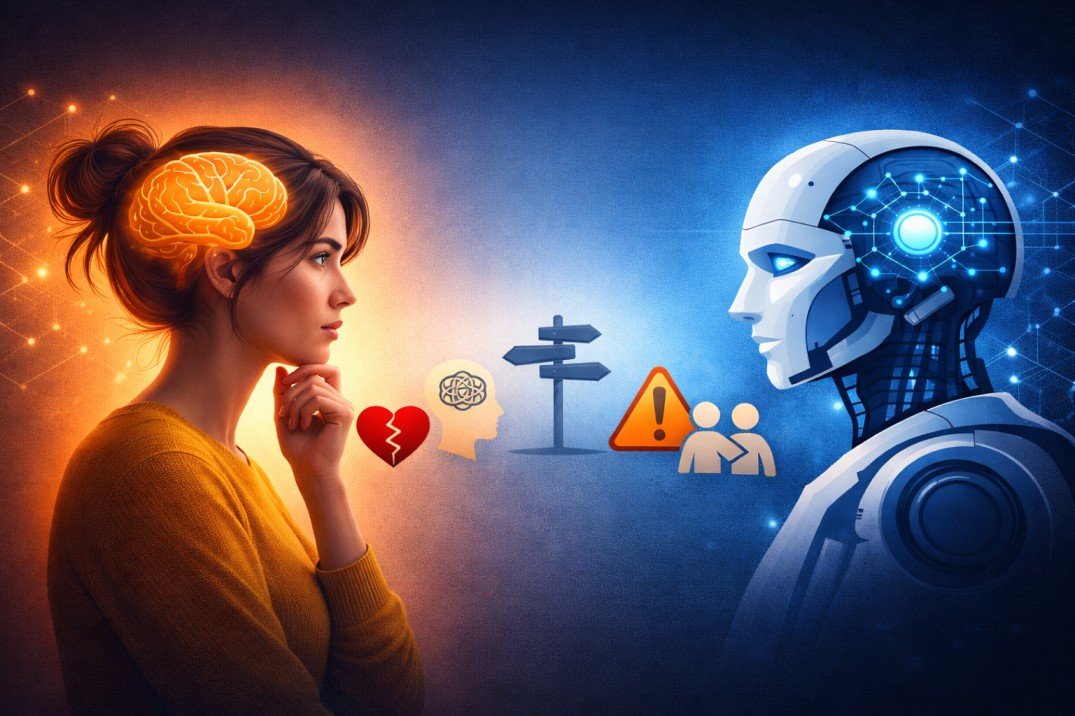
For decades, movies and stories have shaped how we think about AI, robots turning against humans, machines taking control, and technology becoming impossible to stop.
Now, AI is no longer just imagination. Tools like ChatGPT are part of everyday life, evolving daily and becoming more capable with each update.
As this shift happens, many people are starting to feel uneasy.
Some worry about losing their jobs.
Others feel pressure to keep up with rising productivity expectations.
There are concerns about technical errors, AI learning the wrong things, or being misused.
And for some, the fear goes even further, machines turning against humans or a future conflict between humans and AI.
Let’s clear everything for you in this article.
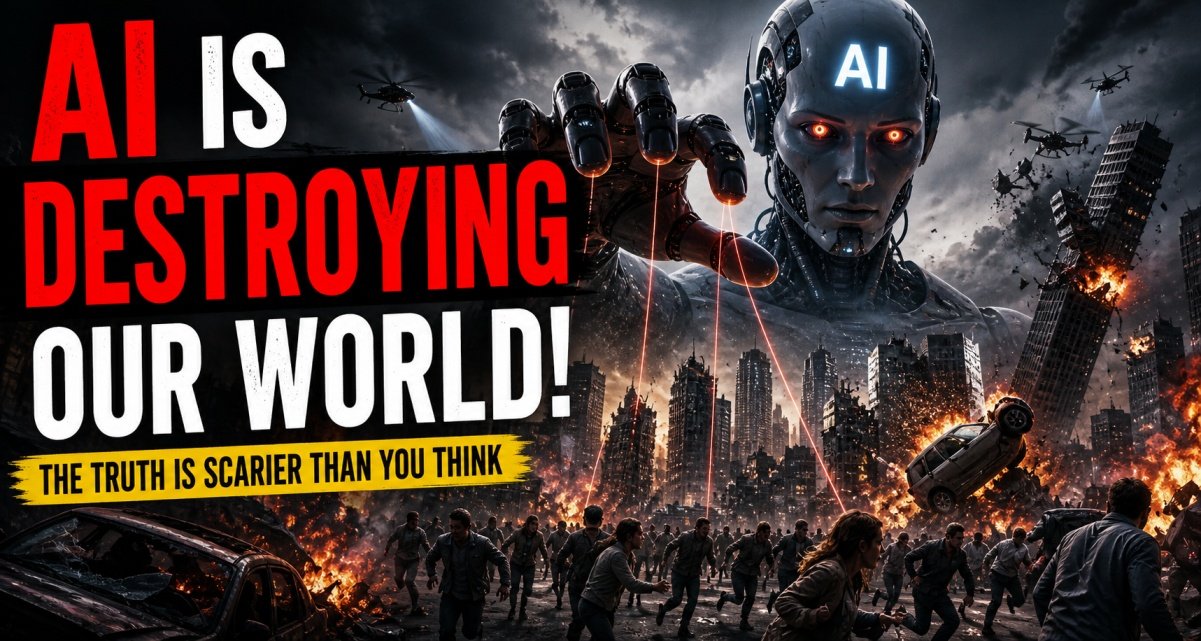
It’s one of the most common fears around AI, and honestly, it didn’t come out of nowhere. For years, movies, news headlines, and online discussions have pushed the idea that once machines become powerful enough, they might turn against us.
A big part of this fear comes from the concept of superintelligence, the idea that AI could one day become smarter than humans and operate beyond our control. That sounds alarming, and in theory, it’s something researchers do discuss.
But here’s where things often get misunderstood.
AI doesn’t have intentions. It doesn’t feel anger, greed, or revenge. It doesn’t “decide” to be good or bad. Systems like ChatGPT generate responses based on patterns in data, not personal motives or desires.
So when people talk about AI becoming “evil,” they’re applying human traits to something that doesn’t think like a human at all.
That said, this doesn’t mean there are no risks.
The real concern isn’t evil intent, it’s harmful outcomes. AI can make mistakes, reflect biases from its training data, or be used in ways that cause damage if not properly controlled. In those cases, the problem isn’t that AI wants to harm us, but that it’s being used or designed without enough care.
So yes, uncertainty exists. AI is evolving, and we don’t have all the answers yet.
But framing it as machines suddenly turning evil and wiping out humanity oversimplifies the situation and creates more fear than clarity.
The reality is more grounded, and more important to understand.
It’s easy to think intelligence works like a scale, where AI is slowly catching up to humans. But intelligence isn’t that simple.
Human intelligence is shaped by context, emotions, experience, and real-world understanding. We don’t just process information, we interpret it, question it, and connect it to meaning. Even a small decision we make is influenced by memory, intuition, and lived experience.
AI works very differently. Systems like ChatGPT rely on pattern recognition and data. They generate responses based on what they’ve learned, not because they truly understand or experience anything.
That’s the key difference.
AI can perform tasks efficiently, but it doesn’t “understand” in a human sense. And recognising this matters, because it helps us stay realistic about what AI can do, and what it simply cannot replace.
While a lot of the conversation around AI focuses on risks, there’s also a very real upside. AI is already making everyday tasks faster, easier, and more efficient across multiple areas of life.
AI is taking over repetitive tasks that used to consume hours.
From drafting emails to writing code and summarising research, tools like ChatGPT are helping people get more done in less time, allowing them to focus on more meaningful work.
AI is improving early detection and diagnostics by analysing large amounts of medical data quickly.
It can spot patterns that might be missed and support doctors with more data-driven insights, leading to faster and more informed decisions.
Learning is becoming more personalised.
AI can explain concepts instantly, adapt to different learning speeds, and provide support whenever needed, making education more accessible than ever.
Companies are using AI to analyse data at scale and gain faster insights.
This helps in making better decisions, understanding trends, and responding quickly to changes.
From planning your day to recommending what to watch or buy, AI is quietly simplifying everyday life.
It reduces effort, saves time, and makes routine decisions easier.
While AI is making life easier, there’s a subtle shift happening in how we think and function. The more convenient something becomes, the less effort we tend to put in, and over time, that can change our cognitive habits.
When answers are always one prompt away, it’s natural to start asking AI instead of thinking things through yourself.
At first, it feels efficient. But over time, this habit can reduce your ability to analyse, question, and solve problems independently. You may still get the right answers, but the process of how you arrived there starts to weaken.
AI delivers instant responses, and that conditions the brain to expect speed over depth.
Tasks that require patience, reading, or deep thinking can start to feel slow or frustrating. This shift can gradually reduce your ability to focus for long periods, especially on complex or mentally demanding work.
When you know information is always available, you stop storing it. Instead of remembering details, your brain starts remembering where to find them. Over time, this can weaken recall ability and reduce how deeply you retain knowledge.
AI can offer suggestions, options, and even conclusions.
But relying too heavily on those suggestions can make you second-guess your own judgement. Instead of evaluating situations yourself, you may start defaulting to what AI recommends, even when context or personal insight matters more.
Constant interaction with AI tools can overwhelm the brain.
You’re exposed to large amounts of information quickly, often without enough time to process it properly. This can lead to mental fatigue, confusion, and a feeling of being overloaded rather than informed.
When AI handles tasks for you, you practice those skills less.
Writing, problem-solving, analysis, even basic research, these are all abilities that improve with use. If they’re consistently outsourced, your understanding can become shallow, and true expertise becomes harder to build.
The real concern isn’t that AI suddenly replaces humans. It’s that, over time, we may rely on it so much that our own thinking becomes less active, without even realising it.
Not really in the way people often think. There’s no need for panic or extreme fear about AI suddenly taking over.
But at the same time, blind trust isn’t the answer either.
AI is powerful, but it’s still a tool. And like any tool, its impact depends on how we use it. The real risk begins when it shifts from being something that assists us to something we start depending on without question.
That’s where problems quietly build.
Using AI to save time, explore ideas, or improve productivity can be incredibly helpful. But relying on it for every decision, every answer, or every thought can slowly reduce our own engagement and awareness.
The key is conscious usage.
Knowing when to use AI, and when to step back and think for yourself, is what will define whether it helps us grow or makes us more dependent.
AI doesn’t need to be feared.
But it does need to be used with awareness.
AI isn’t going to suddenly replace humans or take over everything overnight.
What it will do is reshape how we think, work, and live, often in small, gradual ways that are easy to miss.
The biggest risk isn’t the technology itself. It’s how we respond to it.
If we start depending on AI for everything, our thinking, decisions, and skills may slowly weaken. But if we use it as a tool, something that supports rather than replaces our thinking, it can actually make us more capable.
The future of AI isn’t just about how advanced it becomes.
It’s about how we choose to use it.