Physical Address
304 North Cardinal St.
Dorchester Center, MA 02124
Physical Address
304 North Cardinal St.
Dorchester Center, MA 02124
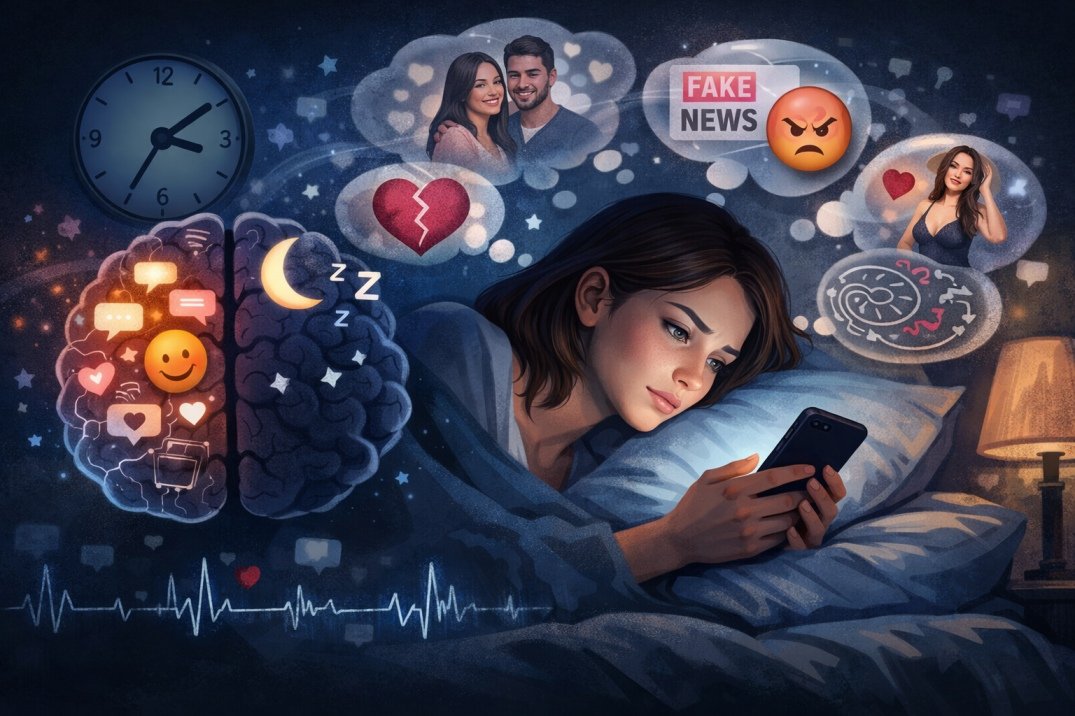
You try to rest, but within a few minutes, you feel the urge to pick up your phone.
You open Instagram and start scrolling.
One video turns into 30 minutes, sometimes even hours, before you finally try to sleep.
But even after putting your phone down, your mind doesn’t slow down. Thoughts keep running. Your brain feels overloaded, as if it’s still processing everything you just watched.
If this feels familiar, it’s not just about staying up late. Late-night scrolling affects how your brain prepares for sleep, how deeply you rest, and how you feel the next day.
The real question is, does this habit actually harm your brain, or can the effects of sleep loss be reversed?
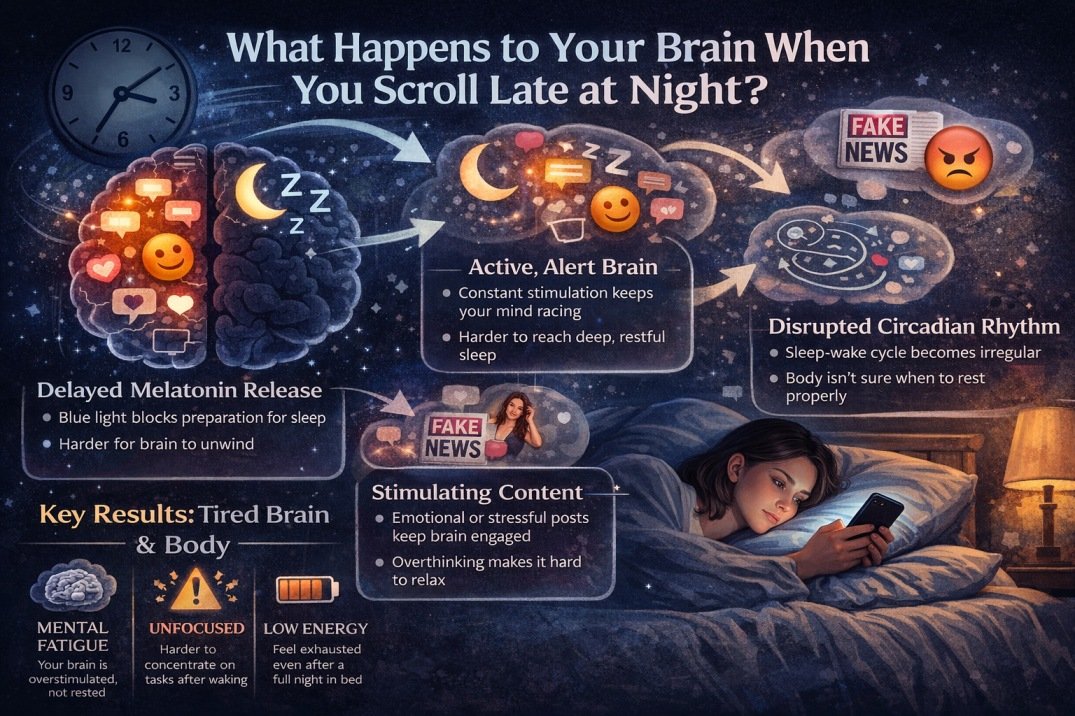
At night, your brain is supposed to gradually shift into a resting state. This usually happens when lights are low, stimulation is minimal, and your body starts preparing for sleep.
But when you’re scrolling on Instagram, your brain stays in an alert mode.
Instead of winding down, your brain stays switched on.
You might put your phone down, but your brain doesn’t stop immediately.
Think about what happens during scrolling:
When you finally stop, your mind is still trying to process all of that.
That’s why:
One of the biggest issues isn’t just how long you scroll, but when.
Late-night scrolling pushes your sleep time further without you realising:
Your body misses its natural sleep window, making it harder to fall asleep even when you try.
Even if you eventually fall asleep, your brain hasn’t fully relaxed.
Instead of entering a calm state, it carries leftover stimulation from what you just consumed.
This can lead to:
It’s not always obvious, but the pattern looks like this:
Over time, your brain starts associating bedtime with stimulation instead of rest.
And that’s where the real impact begins.
Using social media before bed keeps your brain active when it should be slowing down. Fast, short content delays the release of melatonin and disrupts your circadian rhythm, making it harder to feel sleepy on time.
At the same time, your brain takes in too much information too quickly. This increases cognitive load and triggers random thoughts, memories, and emotional reactions. Even content you don’t fully trust can feel mentally disturbing or conflicting.
As a result, your mind stays active even after you stop scrolling. Sleep gets delayed, feels lighter, and you wake up mentally tired instead of refreshed.
Yes. Late-night scrolling can leave you feeling tired even if you were in bed for enough hours.
When you use social media before sleep, your brain doesn’t fully switch into a resting state. The delay in melatonin release and disruption of your circadian rhythm affect not just when you sleep, but how deeply you sleep.
Even if you sleep for 6–8 hours, the quality of that sleep may be lower.
Your brain may:
As a result, you wake up feeling:
This is why “enough sleep” doesn’t always mean “rested sleep” when late-night scrolling becomes a regular habit.
If your sleep loss is mainly caused by late-night scrolling, then yes, it can recover. Once you reduce screen use before bed, your brain starts relearning that lying down means it’s time to rest. The release of melatonin becomes more consistent, and your circadian rhythm gradually returns to its natural timing. Within days or weeks, sleep usually becomes deeper and more refreshing.
But if your sleep loss is linked to something deeper, like stress, overthinking, or an emotional situation, reducing scrolling will help, but it may not be enough on its own. In those cases, your mind may still stay active at night even without your phone.
So the real answer is simple:
If scrolling is the main cause, recovery is very likely.
If something else is affecting your sleep, you’ll need to address that part too for full recovery.
Late-night scrolling usually replaces something your brain needs, like relaxation or distraction. If you only try to stop, the urge stays.
Instead, replace it with something simple:
The goal is to give your mind a softer way to unwind.
Your brain doesn’t naturally know when the day is over anymore.
Set a small signal:
This helps your brain associate that moment with rest.
You don’t need to delete social media, just reduce ease of access.
Small friction can stop automatic scrolling.
Completely restricting yourself can backfire.
Instead:
This keeps control without creating resistance.
The hardest part is tolerating that quiet moment before sleep.
At first, your mind may feel:
That’s normal.
If you stay with it, your brain gradually relearns how to slow down without needing constant input.
Late-night scrolling feels harmless in the moment, but it quietly changes how your brain prepares for rest.
If your sleep feels off, your mind feels overloaded at night, or you wake up tired despite enough hours in bed, this habit could be playing a bigger role than you realise.
The important thing is, this is not permanent.
Your brain can reset. When you reduce late-night stimulation and allow your mind to slow down naturally, sleep begins to feel deeper, calmer, and more restorative again.
You don’t need to be perfect.
You just need to give your brain a chance to recognise that night is for rest, not constant input.