Physical Address
304 North Cardinal St.
Dorchester Center, MA 02124
Physical Address
304 North Cardinal St.
Dorchester Center, MA 02124
You open Instagram for a quick break. Just one reel.
But a few minutes later, you’re still scrolling, not really enjoying it, not even sure why you started.
It happens while you’re working, during a call, or even when you just checked your phone seconds ago. The urge comes back again, almost automatically.
If this feels familiar, you’re not imagining it. The constant urge to scroll reels every few minutes is not just a habit or lack of discipline. It’s a pattern your brain has learned through repeated exposure to short, fast, and unpredictable content.
Over time, this creates a loop where you check your phone without thinking, struggle to stay focused, and feel pulled back into scrolling even when you don’t want to.
In this article, you’ll understand why this happens, how social media is shaping this behaviour, and what you can realistically do to reduce the urge without completely disconnecting.
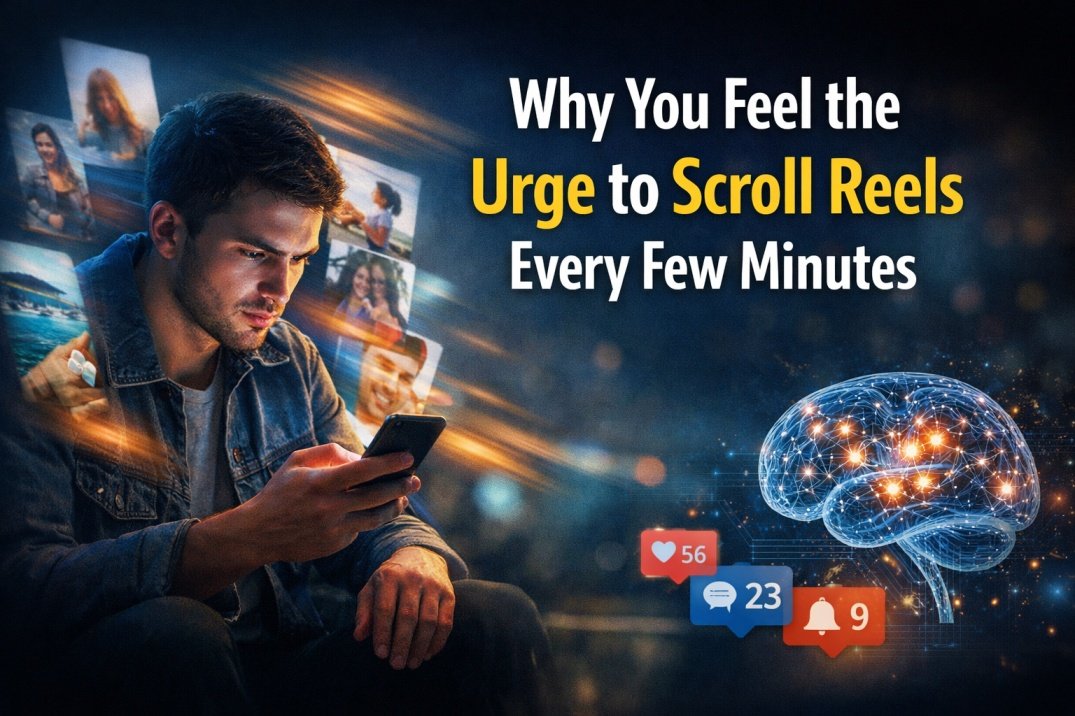
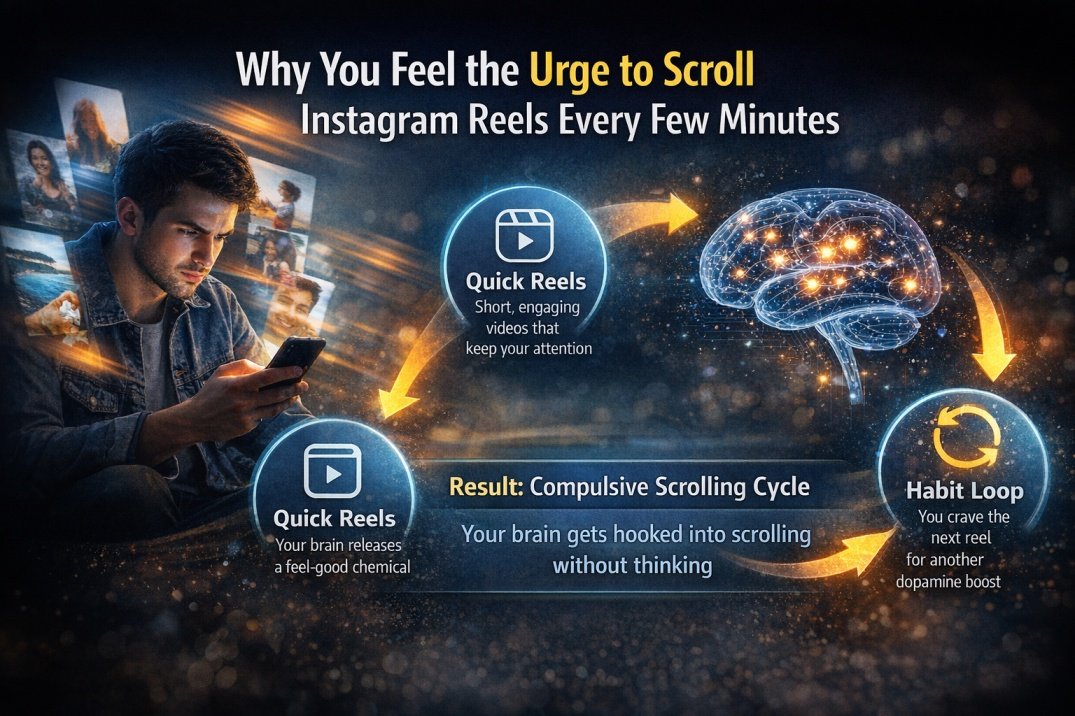
The urge to scroll reels every few minutes happens because your brain has adapted to short, fast, and unpredictable rewards from platforms like Instagram. Each swipe delivers something new, which trains your brain to keep seeking the next piece of content.
Over time, this creates an automatic habit loop. You start checking your phone without thinking, especially during small gaps in your day, moments of boredom, or while doing other tasks.
This is not just a lack of discipline. It’s a learned behaviour shaped by how modern social media is designed to hold your attention continuously.
A common pattern people notice is this:
“I didn’t even think about it. I just opened the app.”
That’s the key sign.
When scrolling starts happening without a clear decision, it’s no longer just a choice. It has become an automatic behaviour your brain repeats throughout the day.
Short videos train your brain to expect something new every few seconds. After spending time on platforms like Instagram, your mind starts finding normal moments too slow or unstimulating.
So even a brief pause, like waiting, sitting quietly, or switching tasks, can feel uncomfortable. That discomfort quickly turns into an urge to check your phone again.
Earlier, small gaps in the day felt normal. Now, your brain tries to fill every gap with content.
Over time, your mind stops tolerating stillness and starts seeking instant engagement.
The urge isn’t always about entertainment. Often, it’s triggered by:
Scrolling becomes a quick escape.
Instead of sitting with the feeling, your brain learns:
“Open reels, feel better for a moment.”
Each time you scroll, your brain gets a small reward. That reinforces the behaviour.
So the cycle becomes:
Because this loop is repeated many times a day, the urge keeps coming back every few minutes, even when you don’t consciously want to scroll.
When you consume fast, short content repeatedly on platforms like Instagram, your brain adapts to that speed.
Over time, you may notice:
What once felt normal now feels slow or boring.
Reels deliver something new every few seconds. This trains your brain to expect continuous change.
As a result:
This constant search for novelty makes it harder to stay with one thing.
Tasks that require patience, like reading, working, or even having long conversations, start to feel more effortful.
You may find yourself:
Your brain is not “losing ability,” it’s adapting to a different pattern of attention.
One of the biggest shifts is this:
Moments of doing nothing, even for a few seconds, start to feel uneasy.
Instead of resting, your brain pushes you to:
This is why the urge to scroll can show up even when there’s no real reason.
Most people don’t begin with an addiction. It starts as a simple behaviour:
Over time, this repeated action becomes automatic.
A habit becomes a concern when it starts affecting your control.
Habit:
Addiction-like pattern:
Make it slightly harder to open Instagram.
Small barriers interrupt automatic behaviour and give you a moment to pause.
If you simply try to stop scrolling, your brain will look for the same escape again.
Instead, replace it with something quick and easy:
The goal is to give your brain an alternative, not a void.
Decide when you will use reels, instead of letting it happen randomly.
This turns unconscious use into intentional use.
The urge often comes from not tolerating stillness.
Start small:
This gradually reduces the need for constant stimulation.
The next time you feel like checking your phone, pause for a few seconds.
Ask yourself:
Even a brief pause can break the automatic loop.
You don’t need to quit social media completely.
The goal is to bring your behaviour back under your control, one small change at a time.
If you feel the urge to scroll reels every few minutes, it doesn’t mean you lack discipline. It means your brain has adapted to a system designed to keep you engaged.
Platforms like Instagram are built to make scrolling feel effortless and continuous. Over time, that experience turns into a pattern your mind starts repeating automatically.
The good news is, patterns can change.
You don’t need extreme steps or complete disconnection. Small shifts in how you use your phone, how you respond to boredom, and how aware you are of your habits can gradually bring your attention back under your control.
The goal isn’t to stop using social media.
It’s to make sure you’re using it intentionally, not automatically.
The urge to check Instagram every few minutes happens because your brain gets used to quick, rewarding content. Over time, this creates an automatic habit where you check your phone during small gaps, boredom, or even without a clear reason.
Scrolling reels can feel like an addiction when it starts happening automatically and becomes hard to control. If you find yourself opening the app without thinking, struggling to stop, or it affects your work and focus, it may be moving beyond a simple habit.
You can’t stop watching short videos because they are designed to keep your attention with fast, engaging, and unpredictable content. Each swipe gives your brain something new, making it harder to pause or stop.
To stop opening Instagram automatically, create small barriers like removing the app from your home screen, turning off notifications, and pausing for a few seconds before opening it. This helps break the automatic habit loop.
Reels can affect attention span by training your brain to expect constant, quick stimulation. Over time, this can make it harder to focus on longer tasks or stay engaged without interruptions.