Physical Address
304 North Cardinal St.
Dorchester Center, MA 02124
Physical Address
304 North Cardinal St.
Dorchester Center, MA 02124

If you are between 25 and 40, working as a fresher, executive, team lead, or manager in a corporate or remote job, this may feel very familiar. Your day starts with work emails, then Slack, Teams, or WhatsApp office groups begin to fill up with updates, questions, and follow-ups. Many conversations happen at the same time, often about small things that still need your response.
You keep replying so you don’t miss anything important. Someone asks for a quick update, someone needs approval, someone adds you to another thread “for visibility.” Hours pass in reading, typing, checking, and clarifying. By afternoon, you realise your actual tasks are still untouched.
So real work moves to the evening or late night, when messages finally slow down. You feel mentally tired but not satisfied, as if your energy went somewhere but nothing meaningful got completed. Many men and women today quietly wonder why answering emails and group messages feels more exhausting than doing the real work itself, and whether this is normal in modern work life.
In many workplaces today, your job is not just tasks, it is constant communication. You give updates, answer questions, share progress, and reply to follow-ups throughout the day. Even small work now needs multiple messages before anything moves ahead.
The same discussion often moves across platforms. It starts on Slack or Teams, continues in a meeting, and then must be written again as a formal email because email is the official record. You may also need to update a tracker or group so everyone stays informed. This creates communication overload at work, where talking about work takes more time than doing it.
There is also pressure to respond quickly to work emails and chat messages to show you are active. Managers and team leads face even more volume because they are copied on many threads and expected to coordinate between people. Over time, communication stops supporting work and starts replacing it, leaving you busy all day but with little real work completed.
Every message pulls your attention away from what you were doing. You stop your task, read the message, think, reply, and then try to go back. Your brain must reload the previous work each time. Doing this many times a day quickly drains mental energy, even if each reply takes only a minute.
Each email or chat needs decisions. Is this urgent? Do I reply now or later? How formal should I sound? Who should be included? Hundreds of these tiny choices create decision fatigue, which makes you feel unusually tired without doing heavy work.
Real work needs quiet time to think. Constant notifications break that focus before your brain settles. You work in small fragments instead of one steady stretch, so tasks feel harder and slower.
Even when you try to concentrate, part of your mind watches for new messages. You worry about missing something important. This continuous alert state uses energy, similar to low-level stress.
Most messages are not clear action items. You must scan long threads to find what matters. Important points are often buried between casual replies, which increases mental load.
When you complete a task, it feels done. Communication never ends. New emails arrive, new groups become active, new questions appear. Your brain does not get closure, so fatigue builds faster than with normal work.
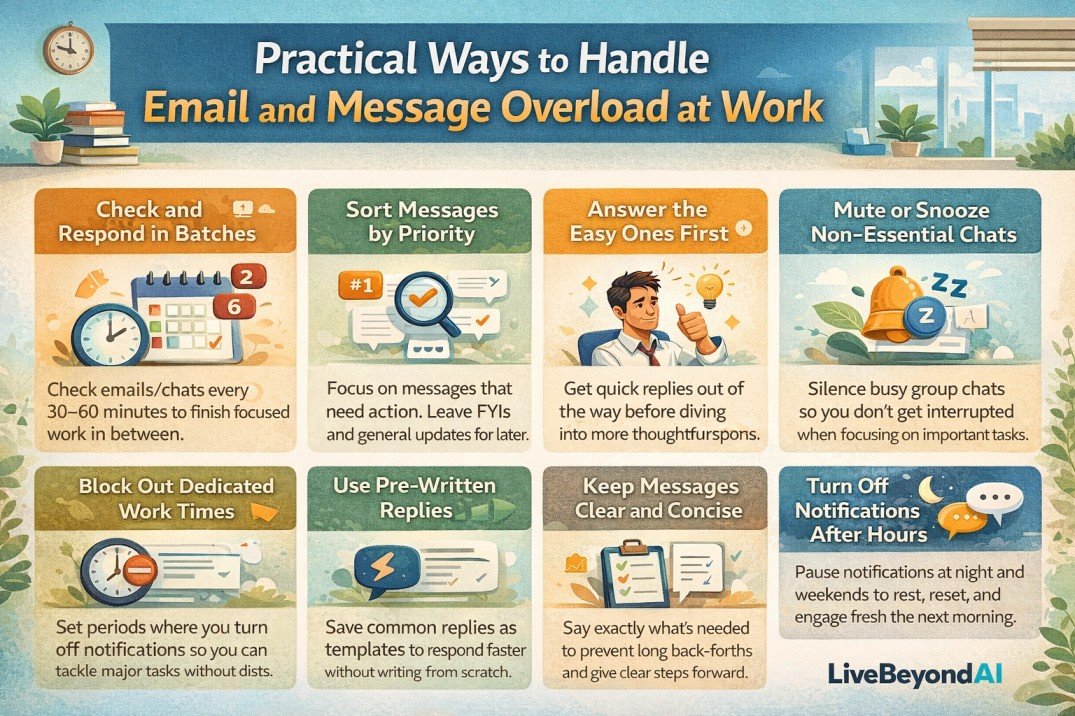
You may not be able to reduce the number of emails and work messages, but you can reduce how much mental energy they consume. Small changes in how you read, prioritise, and respond can protect your focus without making you seem unavailable or uncooperative.
These habits do not eliminate communication overload, but they help you stay in control of your attention and reduce the exhaustion that comes from constant interruptions.
Sometimes late messages or “quick calls” come when you are already offline, tired, or with family. You may not be able to say yes, but you also don’t want to sound unhelpful or damage team relationships. The safest approach is to show that the timing is the issue, not the work, and that you will engage soon.
These responses keep communication open while protecting your time. They show reliability, not resistance, and help you rejoin the conversation naturally the next day without awkwardness or conflict.
Feeling drained after a day of emails and group messages does not mean you are weak, slow, or bad at your job. It usually means your brain spent the whole day switching attention, processing information, and staying alert without getting the calm focus needed to finish real work. That kind of mental load builds fatigue faster than most people expect.
Modern work relies heavily on constant communication, especially in large teams and remote environments. When conversations never stop, your mind never fully rests during work hours. This is why many people feel more productive late at night, when notifications finally slow down.
You may not be able to control how many messages come in, but you can control how you engage with them. Small habits, clear expectations, and realistic boundaries can protect your energy without harming teamwork. Over time, this helps you stay productive during the day and less exhausted by the end of it.
If this experience feels familiar, you are not alone. Many professionals between 25 and 40 quietly struggle with communication overload at work. Understanding what is happening is the first step toward managing it better and making your workday feel manageable again.
To handle overwhelming work volume like emails, Slack or Teams messages, and tasks, start by separating what needs action from what is only for awareness. Focus first on messages with deadlines, decisions, or direct questions. Checking communication in batches instead of constantly, and completing one meaningful task before returning to messages, can reduce overload while keeping you responsive.
Sending emails can give you anxiety because emails feel formal, permanent, and visible to others. You may worry about sounding wrong, being misunderstood, or creating extra work for yourself if the message is not perfect. When you send many emails every day, this pressure builds up and can make even simple replies feel stressful.
Work emails and messages feel more tiring than actual work because they force your brain to switch attention repeatedly. Each message requires reading, deciding, responding, and then trying to return to your original task. This constant switching drains mental energy faster than focused work, which allows deeper thinking and a clear sense of completion.
It is normal to spend most of the day replying instead of doing real work in many modern jobs. Teams now rely heavily on coordination, updates, approvals, and visibility across departments. Communication has become a major part of the job itself, especially in large organisations and remote work settings.
Group chats at work feel overwhelming because many conversations happen at once and important information can get buried between casual messages. You may feel pressure to read everything so you do not miss decisions, instructions, or questions directed at you.
Many people end up doing real work late at night because daytime hours are filled with interruptions from emails and messages. When communication slows down in the evening, your brain finally gets uninterrupted time to focus, making it easier to complete tasks that require concentration.