Physical Address
304 North Cardinal St.
Dorchester Center, MA 02124
Physical Address
304 North Cardinal St.
Dorchester Center, MA 02124
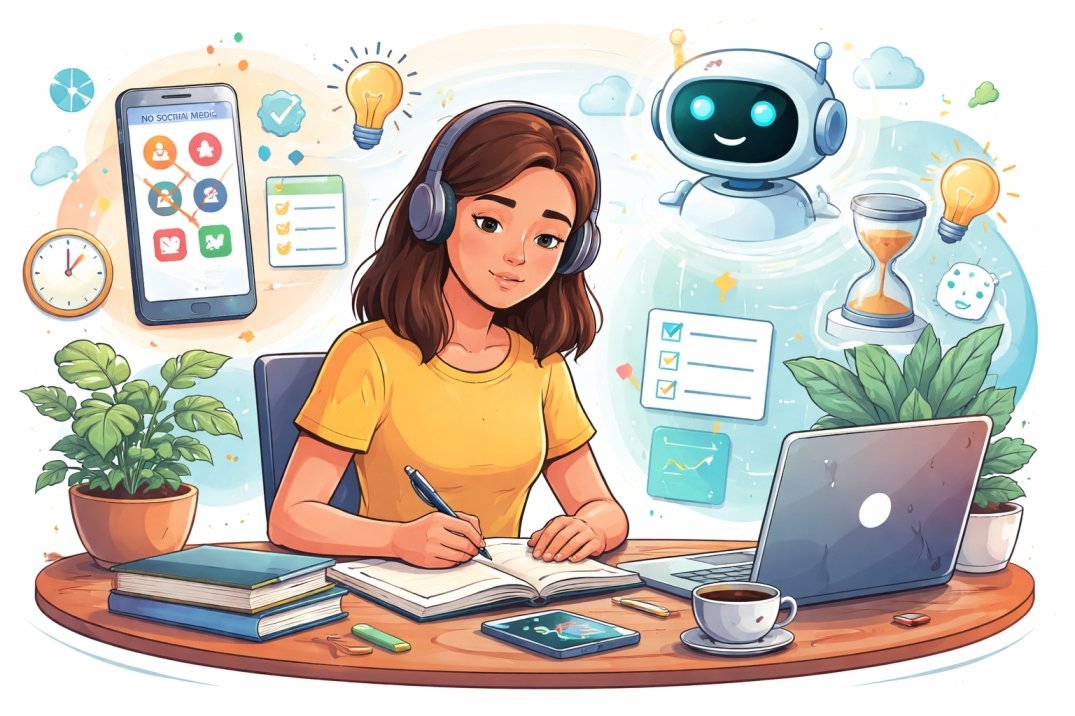
You keep wondering why you’re not able to finish those pending projects, studies, or things you know you need to do. Every time you sit down to start, your mind comes up with something else, you’re not in the mood, you’ll do it later, you feel a bit sleepy, or you just open your phone for a quick scroll.
And somehow, the “quick break” turns into losing the whole session again.
This isn’t just procrastination in the old sense. It’s happening more often now, especially in a world where AI tools, instant answers, and endless content have made effort feel optional most of the time.
So the real question is not just why you’re avoiding work, but why your brain seems to resist hard work so strongly in today’s AI-driven world, even when you genuinely want to get things done.
Your brain isn’t naturally built to enjoy effort. It’s built to conserve energy and take the easier path whenever possible.
So when something feels difficult, like focusing on a task, thinking deeply, or sitting with confusion, your brain immediately starts looking for relief. Something easier. Something quicker.
And now, in today’s AI world, that “easier option” is always available. If something feels hard, you can instantly search it, summarise it, or get an answer in seconds.
Over time, this changes your default behaviour. Your brain starts expecting that there should always be a shortcut. So when there isn’t one, even normal work starts to feel unusually heavy, and you naturally drift away from it.
Earlier, if you didn’t understand something, you had no choice but to sit with it. You would re-read, think again, maybe ask someone, or slowly figure it out step by step. That process was uncomfortable, but it trained your brain to stay with difficulty.
Now that struggle almost doesn’t exist.
If something feels confusing, AI can explain it instantly. If something feels hard, you can get a summary, solution, or even a ready-made output in seconds. You don’t have to stay in that uncomfortable “I don’t get it yet” phase anymore.
The problem is, your brain used to grow through that phase.
So when struggle is removed too often, your tolerance for it drops. Even small friction starts to feel annoying. You expect clarity immediately, and when it doesn’t come instantly, your mind loses interest or shifts away.
Your brain has slowly adapted to a world where rewards come instantly.
Short videos, quick updates, notifications, instant replies, everything is designed to give you something new within seconds. There is always a next swipe, next post, next hit of information.
Because of this, your attention now gets used to fast feedback.
So when you sit with something slow, like studying, writing, planning, or building something, your brain doesn’t get that same constant reward. It feels like nothing is happening, even when you are actually making progress.
And that’s where the problem starts.
Your mind begins to compare:
fast = interesting
slow = boring
Not because the task is boring, but because your brain has been trained to expect speed everywhere. Over time, anything that doesn’t give immediate feedback starts feeling harder than it really is.
It’s not just that you get distracted easily, it’s that your attention is now used to switching constantly.
You move between apps, tabs, videos, messages, sometimes within seconds. Even when you’re not thinking about it, your brain is trained to shift focus again and again.
So when you try to sit with one task, something like studying, writing, or deep thinking, it feels unnatural at first. Not because the task is difficult, but because staying in one mental space feels unfamiliar.
Your mind keeps looking for a break, a switch, a small escape. That’s why you suddenly feel the urge to check your phone or do something else “for a minute.”
Over time, this makes sustained focus feel heavier than it actually is, because your brain is no longer used to staying in one place for long.
Most of the resistance doesn’t come while doing the work, it comes right before starting.
When you think about a task, your brain quickly estimates the effort, time, and discomfort involved. In that moment, it often feels bigger than it actually is. So instead of starting, your mind pushes you toward something easier, like scrolling or delaying it.
Once you actually begin, the task is usually more manageable than expected. But getting to that starting point feels heavy because your brain is trying to avoid the initial discomfort.
In today’s environment, this gets stronger. Since there are always easier alternatives available, your brain has more reasons to delay. So starting becomes the hardest part, even when the task itself is not as difficult as it seems in your head.
Even when you’re not actively working, your brain is still constantly processing information.
Scrolling, watching videos, switching apps, checking updates, all of this keeps your mind in a state of continuous input. It feels like downtime, but your brain is still working in the background, just without direction.
The problem is, this kind of stimulation doesn’t settle your mind. It keeps it active, but scattered.
So when you try to focus on something serious, your brain is already full, but not organized. There’s mental noise, but no clarity. That’s why even simple tasks can feel heavier than they should.
You’re not underworked. You’re overstimulated without structure, and that makes deep focus harder to access.
Your brain and body are not separate systems. When your body is inactive for long periods, your mental energy and focus also drop.
Most people today spend long hours sitting, working on screens, scrolling, or switching between apps. Very little physical movement is involved. Over time, this reduces overall alertness and makes even simple tasks feel heavier.
Physical activity helps regulate energy, stress, and focus. When that is missing, your baseline mental state becomes more sluggish. You may feel low on energy even when you haven’t done anything physically tiring.
This creates a hidden effect: tasks that require effort start feeling bigger than they actually are. Not because they are difficult, but because your system is already in a low-energy state.
So when you combine low movement with constant screen stimulation and AI-driven shortcuts, your brain becomes less willing to engage in anything that needs sustained effort.
Training your brain for hard work today is not about rejecting AI or forcing extreme discipline. It’s about reducing overstimulation, rebuilding focus, and slowly helping your mind tolerate effort again while still using AI as a support tool, not an escape.
Hard work feels harder today not because your brain is weak, but because it has adapted to a world of instant answers, constant stimulation, and effortless shortcuts through AI and digital tools. The resistance you feel is mostly a mismatch between what your environment trains your brain to expect and what real focus actually requires.
The solution is not to fight your brain, but to retrain it slowly. Reduce overstimulation, create small focus routines, add movement, and use AI as a support tool instead of a replacement for thinking. Over time, your brain stops resisting effort and starts adapting back to it, while still benefiting from the speed and convenience of AI.