Physical Address
304 North Cardinal St.
Dorchester Center, MA 02124
Physical Address
304 North Cardinal St.
Dorchester Center, MA 02124

You wake up and grab your phone before getting out of bed. You scroll for a few minutes. Then again on the way to work. At the office, you sit in one place and stare at a screen for hours. Typing. Clicking. Reading. Replying. Meetings. Calls. More screens. When work slows down, you open reels or games. On the way home, phone again. At dinner, TV or YouTube. In bed, one last scroll.
You didn’t run. You didn’t lift anything heavy. You barely walked.
But by evening, you feel very tired.
Your head feels full. Your eyes hurt. Your body feels slow. Even small things like talking, cooking, or going outside feel like too much. You may wonder, “Why am I this tired? I didn’t even do anything.”
This is happening to many people now, from young interns to older workers. We sit more than ever, but our brains never get a break. There is always something to look at, read, or respond to.
You are not out of physical strength. You are out of brain energy. Your brain has been working all day, even while your body stayed still.
The good news is this can be fixed once you understand what is really going on.
You sat most of the day, but your brain did not rest even for a minute.
All day long it was reading, listening, thinking, replying, switching tasks, and paying attention. After hours of this, your brain gets tired, just like legs get tired after walking.
Your focus also wears out. Simple work feels harder. You forget things. Small tasks feel heavy. This is attention fatigue.
Too much information makes it worse. Emails, chats, updates, videos, instructions, your brain has to sort everything with no time to clear out.
Then there are hundreds of tiny decisions. What to reply. What to do first. What matters. By evening, even choosing dinner can feel like work.
Screens strain your eyes and brain too. Bright light, staring at one spot, barely blinking.
And dealing with people calls, meetings, messages, drains energy even if you never leave your chair.
Sitting still does NOT mean your brain is resting.
Your brain has been working nonstop, and now it’s overloaded.
Your body stayed still for hours. That creates a different kind of tiredness.
When you don’t move much:
Sitting also signals to your body that you are inactive, even though your brain is working hard. This mismatch makes the tiredness feel worse.
You may notice:
Your body is not tired from effort. It is tired from too little movement for too long.
That’s why you can feel exhausted even after “doing nothing” all day.
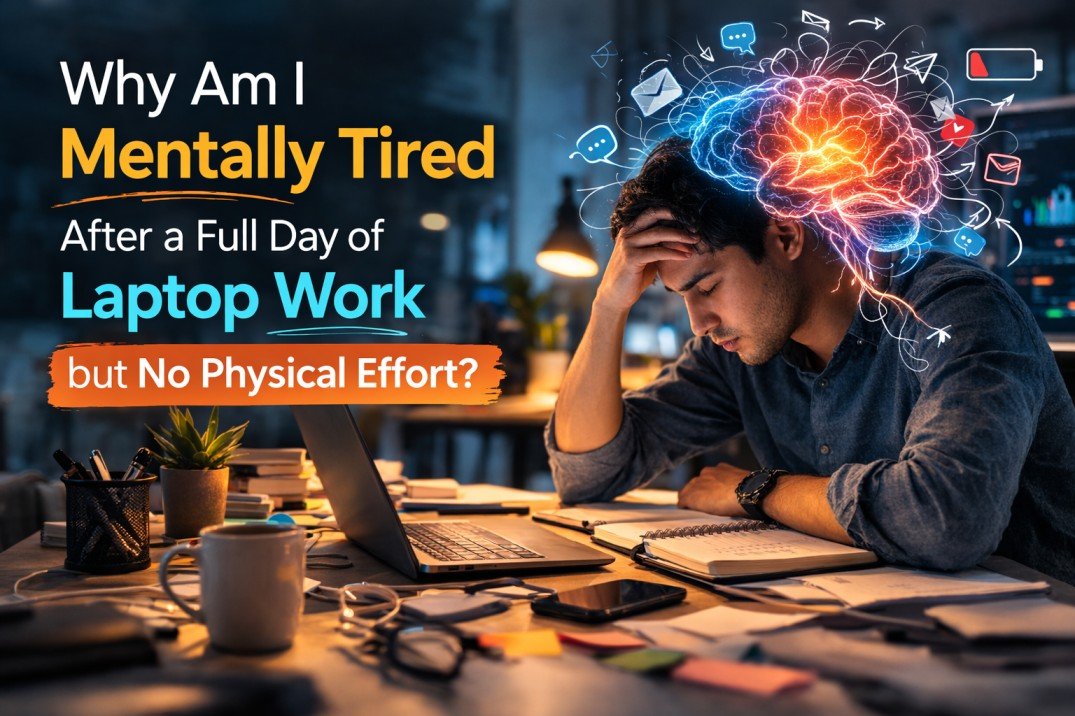
Even when you weren’t typing, your mind stayed busy.
Your focus system was running nonstop all day.
Your brain kept taking in new input without pause.
By evening, your mind feels full, like an inbox that never got emptied.
You may not notice them, but they add up fast.
Your brain uses energy for every small choice. By night, even simple decisions feel hard.
Staring at a screen for hours is not neutral.
Your brain has to work harder just to keep seeing comfortably.
Your body needs movement to stay energized.
This makes you feel heavy and sluggish.
Even without physical effort.
Social interaction uses a lot of brain energy.
Jumping between things is harder than doing one thing deeply.
Your brain keeps rebuilding focus from scratch.
Many workspaces are mentally dull but tiring.
Your brain gets tired without feeling stimulated or restored.
All of this happens while your body stays in one place.
So by evening, you don’t feel “worked out” – you feel drained, foggy, and low on energy.
Even though the work was “in your head,” your whole body starts to feel tired.
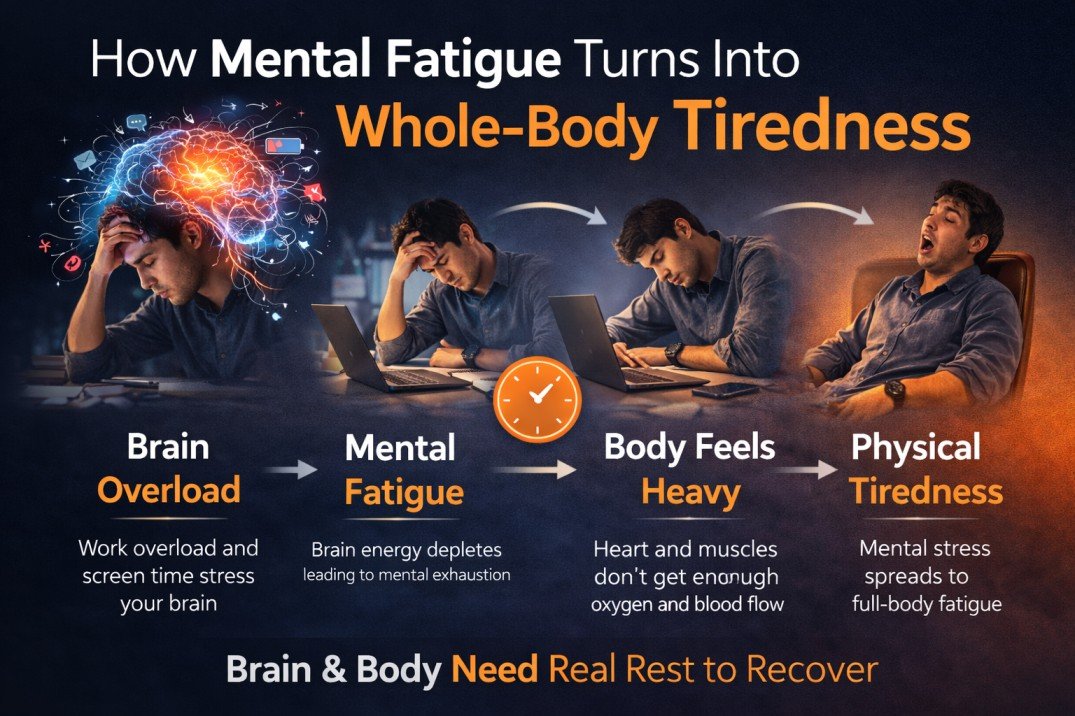
Your brain is in charge of how energetic or drained you feel. When it gets overloaded, it signals the body to slow down.
What happens:
This can make you feel:
Nothing is “wrong” with your body. It is reacting to a tired brain.
👉 Your body feels tired because your brain is exhausted.
You don’t need extreme solutions. Small changes after work can bring your energy back faster than lying down with your phone.
Your brain needs movement to wake back up.
You don’t need a hard workout. Even slow movement can boost energy.
Looking at another screen is not a break.
Your brain relaxes when the visual scene changes.
Your brain needs quiet, not more input.
Boredom actually helps the brain recover.
Screens don’t use muscles, but they still drain resources.
Your brain runs on fuel just like your body.
Recovery also comes from preventing overload.
Small habits make a big difference over time.
These steps may feel simple, but they work because they give your brain what it didn’t get all day, movement, quiet, variety, and real rest.
If you feel drained after a day of “just sitting,” you are not lazy or weak. Your brain has been working nonstop.
Modern life keeps us connected from morning to night, with almost no real downtime. This kind of tiredness comes from mental overload, not lack of effort.
Brain energy needs recovery, just like physical energy. Without it, exhaustion builds day after day.
The good news is that small changes can bring your energy back. Real breaks, movement, less evening screen time, and better sleep make a big difference.
You don’t need to push harder. You need to recover better.
Yes. Computer work uses constant focus, decision-making, and screen attention. Your brain stays active for hours without real breaks, which can leave you feeling drained even if your body didn’t move much.
Mental work keeps your attention system switched on the whole time. There are no natural pauses like in physical tasks. Your brain keeps thinking, deciding, and monitoring, which slowly uses up energy.
Yes. Long periods of sitting slow blood flow, reduce oxygen to the brain, and make muscles stiff. Your body shifts into a low-energy state, which makes you feel sluggish and heavy.
Your brain did the work. Reading, listening, replying, worrying, and processing information all use energy. Mental effort can exhaust you even when your body stays still.
Move your body, step away from screens, drink water, eat properly, and give your mind quiet time. Even a short walk outside can restore energy better than scrolling on your phone.
Long screen use keeps your brain stimulated and prevents real rest. Bright light, constant input, and task switching can wear down focus and leave you mentally tired.
Your brain has already spent most of its energy on work, screens, and communication. Without recovery during the day, there is little left for evening activities.