Physical Address
304 North Cardinal St.
Dorchester Center, MA 02124
Physical Address
304 North Cardinal St.
Dorchester Center, MA 02124

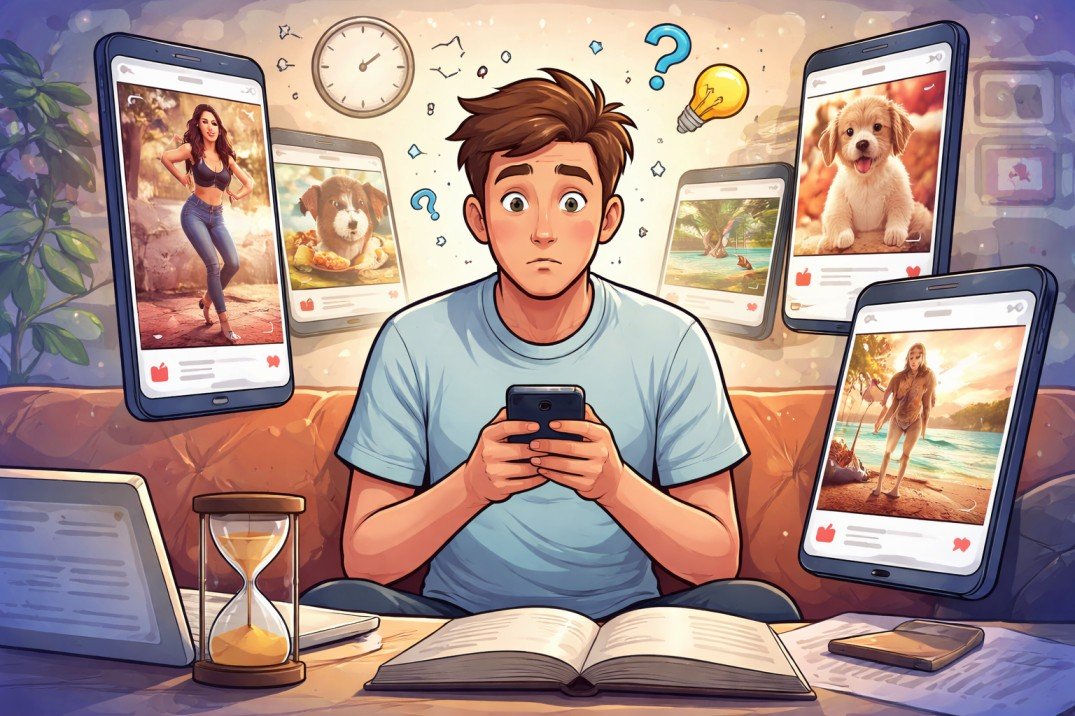
A few years ago, sitting through a long video, reading an article, or listening to a detailed explanation felt normal. Today, many people notice something different. After watching short videos for a while, slower activities start to feel strangely difficult.
You open a book and lose focus within minutes. A lecture or meeting feels longer than it actually is. Even a 10-minute video can feel too slow to finish.
This shift is not simply about discipline or motivation. Short videos are designed to deliver rapid bursts of stimulation, constant novelty, and instant rewards. When the brain becomes used to this fast pace, activities that unfold more slowly can start to feel boring or mentally exhausting.
Over time, this habit can quietly change how your brain handles attention, patience, and focus.
In this article, we will explore how short-form videos influence the way your brain processes information, why everyday tasks suddenly feel slower, and what you can do to rebuild your ability to concentrate.
Short videos can make it harder to stay focused for long periods because they train the brain to expect rapid stimulation and constant novelty. When every clip delivers something new within seconds, the brain becomes used to quick rewards instead of sustained attention.
Over time, this pattern changes how the brain approaches slower activities. Tasks like reading a chapter, watching a long video, or listening to a detailed explanation require patience before the reward appears. But when your brain is used to fast-moving content, it begins to interpret slower experiences as boring or mentally tiring.
This does not mean short videos permanently damage attention span. The brain is highly adaptable. However, frequent exposure to fast-paced content can temporarily lower your tolerance for activities that require deeper focus and longer concentration.
Research discussed by the U.S. National Institutes of Health indicates that heavy digital media use is associated with changes in attention and information processing.
You probably open Reels or Shorts during small moments in your day. Maybe while waiting for food, lying in bed, or taking a short break from studying or work. You expect to watch for a few minutes.
But before you realise it, 30 or 40 minutes have passed. Your thumb keeps swiping almost automatically.
This happens because short-video platforms interact with several psychological systems in your brain that control curiosity, reward, and attention.
Psychologically, humans rely on natural stopping cues to end an activity. A finished chapter, a completed episode, or the end of a task signals your brain to pause.
Short-video feeds remove these cues completely. There is no end, no pause, and no closing moment. Because the next video loads instantly, your brain never receives the signal that the activity is finished.
One of the strongest psychological drivers of habit is variable reward. This means the brain does not know when the next reward will appear.
One video may be boring, the next hilarious, and the next surprisingly useful. Because the reward is unpredictable, your brain keeps swiping in anticipation of the next satisfying moment.
This is the same psychological pattern that makes slot machines addictive.
Short videos often begin with a hook, something surprising, dramatic, or intriguing in the first few seconds. This creates what psychologists call a curiosity gap, where your brain wants to resolve the unfinished question.
Even after one video ends, your brain expects the next one to reveal something equally interesting.
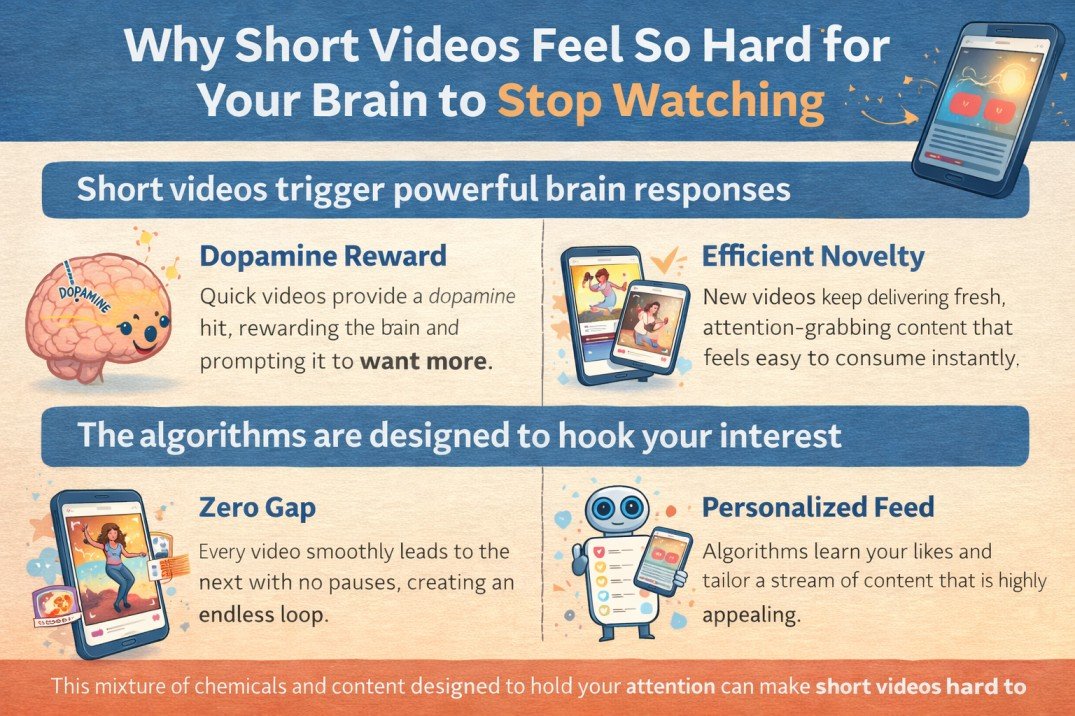
Over time, the platform learns what captures your attention. It notices which videos you pause on, replay, or watch longer.
Psychologically, this creates a highly personalised reward system. The feed starts showing content that closely matches your interests, humour, and emotions, making it even harder to stop scrolling.
Your brain does not release dopamine only when you receive a reward. It also releases dopamine while anticipating a possible reward.
Each swipe creates a moment of anticipation, wondering what the next video will show. That anticipation keeps the brain engaged even when the current video is not particularly interesting.
Together, these psychological effects keep your brain in a loop of curiosity, anticipation, and quick rewards, which is why short videos can hold your attention much longer than you originally intended.
Notice what happens during small pauses in your day. Morning coffee, travelling in a cab, waiting for food, standing in a queue, or sitting alone for a few minutes. Your hand automatically reaches for the phone and opens short videos. These clips slowly begin filling almost every empty moment.
Many people realise that a lot of short videos come from creators who are not experts. Some give random financial advice, others explain relationships, health, or motivation without real qualifications. Yet the scrolling continues because the brain has become used to constant quick stimulation.
After watching certain types of videos, the platform begins showing more of the same. Some people start seeing endless videos of attractive influencers. Others get fitness tips, finance tricks, breakup stories, or relationship advice. Because the feed keeps matching your interests, stopping feels harder.
Waiting for someone, sitting quietly, or having a small break used to feel normal. Now those moments can feel uncomfortable without opening your phone. The mind begins searching for something to watch, as if silence itself has become boring.
Long explanations, reading, studying, or watching a full video may suddenly feel slower than before. Your mind keeps wanting something quicker, similar to the pace of short videos.
If you don’t check short videos for a while, a subtle feeling appears that you might be missing entertainment, information, or something interesting happening online. This feeling pushes people to open the app again, even when they originally did not plan to.
After watching many short videos, the brain temporarily shifts into a fast-processing mode. It becomes used to quick information bursts and rapid topic changes. When you return to normal activities, your mind struggles to adjust to slower cognitive pacing.
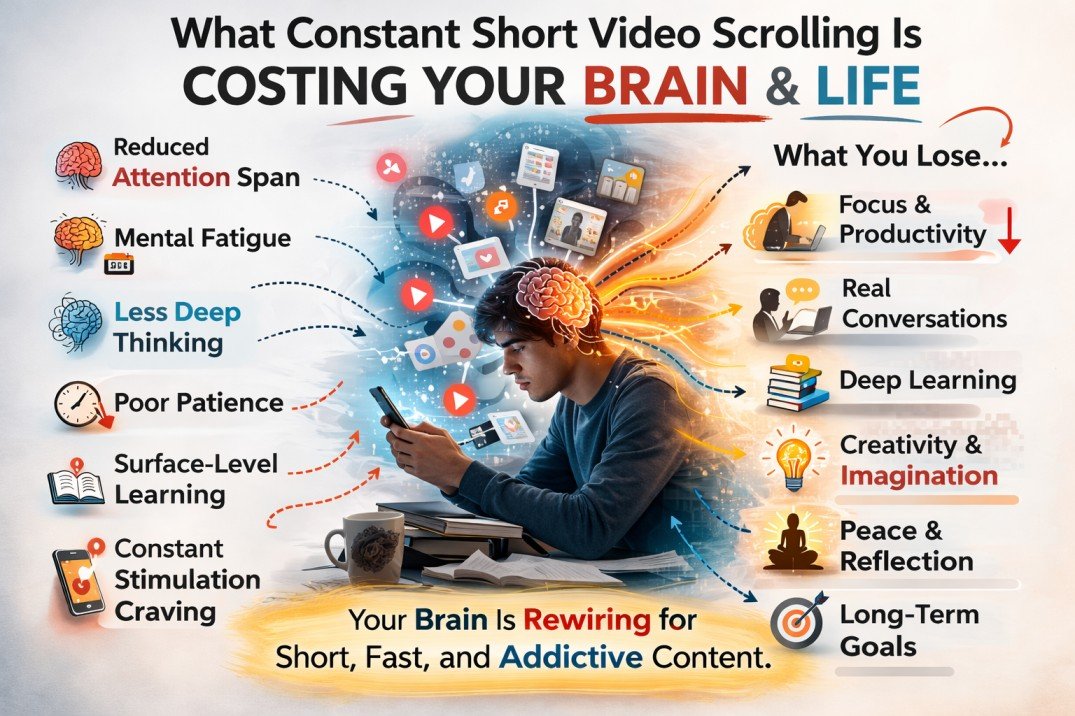
Many people worry that frequent short-video use permanently damages their ability to focus. In reality, attention span is highly adaptable. The brain constantly adjusts to the habits we practise most. If it can learn fast scrolling, it can also relearn slower focus.
What matters is how often you allow your mind to stay with one task without switching stimulation. When the brain starts experiencing longer periods of uninterrupted attention again, its natural focus capacity gradually strengthens.
With small daily changes, most people notice their concentration improving within a few weeks.
Short videos have become a normal part of daily life. They entertain, inform, and fill small gaps in our day. But when we repeatedly turn to them during every free moment, we slowly train our minds to expect constant stimulation and rapid information.
Over time, this habit can make slower activities such as reading, studying, or listening feel more difficult than they used to. The change does not mean our attention span is permanently damaged. It simply shows how adaptable the brain is to the habits we practise.
With awareness and small adjustments in how we use our phones, the mind can easily return to longer focus, deeper thinking, and more comfortable quiet moments.
Short videos can reduce a person’s tolerance for long periods of focus because they train the brain to expect rapid stimulation and frequent novelty. When the mind repeatedly processes information in short bursts, slower activities like reading or studying can start to feel harder.
Long videos feel boring after watching Reels or Shorts because the brain becomes used to receiving new stimulation every few seconds. When content moves at a normal pace, the mind may perceive it as slow even if the topic is interesting.
Automatically opening short videos during free moments happens because the brain forms a habit loop. When small gaps appear in the day, the mind expects quick entertainment or information, so reaching for the phone becomes an automatic behaviour.
Attention span can improve after watching too many short videos because the brain adapts to the habits it practises. When you spend more time reading, focusing on one task, or avoiding constant scrolling, the mind gradually rebuilds longer attention cycles.
Quiet moments feel boring without a phone when the brain becomes used to constant stimulation. If free time is always filled with short videos, the mind may start associating silence with a lack of activity rather than a normal mental pause.