Physical Address
304 North Cardinal St.
Dorchester Center, MA 02124
Physical Address
304 North Cardinal St.
Dorchester Center, MA 02124
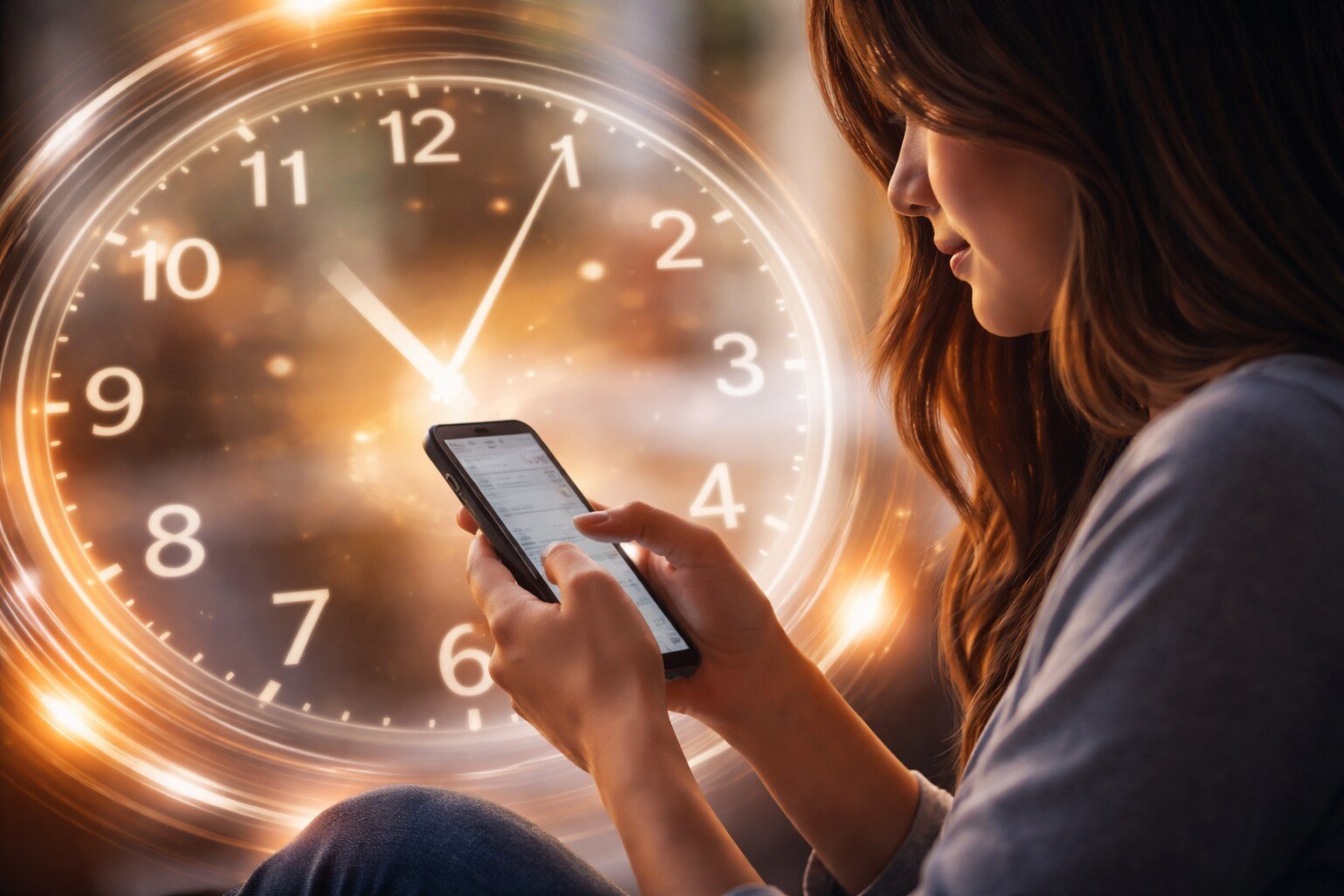
Have you ever opened your phone for a few minutes and suddenly realised an hour was gone? Do you sometimes wonder where your evenings disappear? Why does time crawl in a waiting room, yet vanish the moment you start scrolling? When did five minutes quietly turn into forty-five?
It’s not just poor time management, and it’s not laziness. Something deeper is happening. Screens have subtly changed how we experience time, how we measure it, how we feel it passing.
The way we swipe, scroll, and consume content has reshaped our sense of duration, waiting, focus, and even memory. Minutes feel shorter. Silence feels longer. Boredom feels almost uncomfortable.
Time itself hasn’t sped up. But the way our brain tracks it has quietly shifted, and most of us didn’t even notice when it happened.
Let’s unpack what’s really going on.
You check one notification. Then another. A short video plays. You tell yourself, just five minutes. Suddenly, an hour is gone.
If you’ve ever wondered why does time disappear on social media, it’s not about weak willpower. It’s about design.
Endless scroll removes natural stopping cues. There’s no final page, no clear ending, no pause that signals you to stop. Your brain stays engaged without interruption.
Short-form content keeps resetting your attention. Every few seconds there’s something new. And the brain tracks novelty, not minutes. When stimulation is constant, time feels compressed.
That’s why hours go by so fast online. Your brain was busy chasing small bursts of novelty, not watching the clock.
Screens affect our sense of time by changing how our brain experiences stimulation and reward.
Every scroll, notification, or short video triggers a small dopamine response. Dopamine isn’t just about pleasure, it’s about anticipation. It keeps you curious. It keeps you looking for the next thing. These tiny reward cycles create micro stimulation, small bursts of engagement that keep your brain activated.
Add constant novelty to that. New faces, new ideas, new emotions, all within seconds. Your brain loves change, and digital platforms deliver it endlessly. At the same time, downtime disappears. There’s less silence, less waiting, fewer empty moments for your mind to rest.
Here’s the key idea: time feels short when the brain is highly stimulated. Time feels long when the brain is under-stimulated. When you’re bored, minutes stretch. When you’re engaged, they shrink.
Screens keep us in continuous stimulation loops. And in those loops, our internal sense of time quietly fades into the background.
If you’ve found yourself wondering, has technology shortened attention span or why can’t I focus like before, you’re not alone. Many people notice that sitting with one task now feels harder than it used to.
A big reason is frequent attention switching. We move between messages, videos, emails, and notifications all day. Even brief interruptions break concentration. Over time, the brain gets used to change and starts expecting it.
Short content also conditions us to prefer quick stimulation. When most of what we consume lasts seconds, longer tasks feel slower by comparison. Reading, studying, or working deeply doesn’t give instant feedback, so it can feel uncomfortable.
Screen time and attention span are linked through repetition. The more we practise rapid shifts in focus, the more natural they feel. Staying with one thing begins to require effort.
Silence now feels like lag. Stillness feels unproductive.
It’s not that focus is gone. It just takes more intention to rebuild it.
Research from Harvard Health explains how dopamine drives anticipation and reward-seeking behaviour, which plays a role in repetitive digital habits.
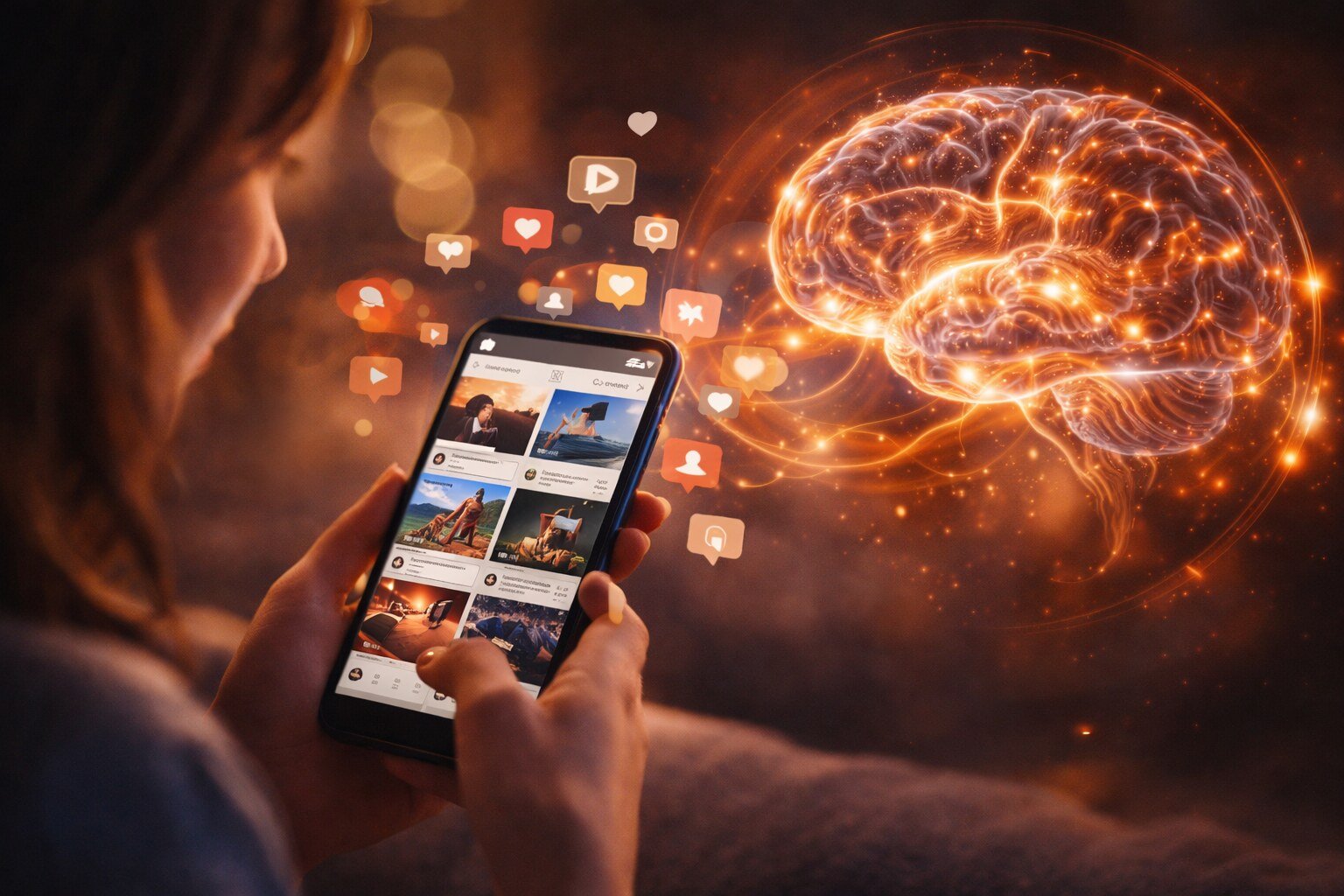
Have you ever reached the end of the day and thought, What did I even do today? You were busy. You were active. But it all feels foggy.
This has a lot to do with how the brain measures time. We don’t experience time only through clocks. We experience it through distinct memories. Moments that are different, emotional, or meaningful create stronger mental anchors. Those anchors stretch our sense of time.
Repetitive digital scrolling, however, creates fewer meaningful anchors. The content changes quickly, but the experience stays the same. Same posture. Same screen. Same scrolling motion. The brain doesn’t mark those moments as distinct events.
Passive consumption also leads to shallow memory encoding. When we’re simply absorbing content without interacting deeply, the brain doesn’t store it strongly. Later, when we look back, there are fewer vivid memories to fill the day.
As a result, the day feels fast in retrospect. Not because nothing happened, but because little of it was deeply recorded.
Time feels long when we live it. It feels short when we can’t remember it clearly.
If you’ve caught yourself thinking, why am I so impatient lately or why does waiting feel harder, the shift may be subtle but real.
Digital spaces are built around instant loading and on-demand entertainment. Music starts immediately. Videos autoplay. Information appears in seconds. There is almost no built-in delay. Over time, the brain adjusts to this rhythm of immediacy.
Notifications reduce pause even further. The moment there’s silence, something lights up. A message, a headline, an alert. The gap that once existed between moments gets filled automatically.
Waiting used to be a normal part of daily life. Standing in line, sitting quietly, looking out of a window. Those pauses gave the mind space to wander and reset. Now, the absence of stimulation can feel uncomfortable.
It’s not that patience disappeared overnight. It’s that the environment changed. When we’re used to instant response, even a short delay can feel like something is wrong. And that quiet shift reshapes how we experience time itself.
It’s a fair question. If our experience of time feels different, is something happening in the brain?
The answer is balanced. The brain is built for neuroplasticity, which means it adapts to repeated patterns. What we practise regularly shapes how certain processes feel over time. If we spend hours in fast, high-stimulation environments, the brain becomes more comfortable operating at that speed.
This is adaptation, not damage. The brain adjusts to rhythm and repetition. When stimulation is frequent and quick, our internal sense of pacing shifts accordingly. When life slows down, the contrast feels stronger.
That doesn’t mean time perception is permanently altered. It means habits influence experience. Change the pattern, and the brain gradually recalibrates.
This is behavioural conditioning, not permanent harm. And awareness is often the first step in restoring balance.
Yes. The goal isn’t to delete everything or step away from the digital world entirely. Screens are part of modern life. The shift begins with awareness and small adjustments.
Start by adding friction. Turn off autoplay. Disable non-essential notifications. Move distracting apps off your home screen. Small barriers create natural pauses, and pauses restore time awareness.
Create intentional stopping points. Decide in advance how long you’ll scroll or watch. Finish at a clear moment instead of drifting. Even a simple mental boundary helps.
Protect long-focus blocks during your day. Keep certain periods phone-free so your brain can re-experience depth without interruption. Focus strengthens when it’s practised consistently.
Reintroduce boredom gently. Sit without filling every gap. Wait in line without reaching for your phone. Let your mind wander again. Boredom stretches time in a healthy way.
Use timers consciously if needed. Not as punishment, but as structure. When you see time passing, you reconnect with it.
Screens don’t have to erase time. When used with intention, they can coexist with focus, presence, and clarity. The difference isn’t the device. It’s the awareness you bring to it.
Time goes fast on your phone because scrolling removes natural stopping points and keeps your brain in a continuous reward cycle. When stimulation is constant and engaging, your brain stops tracking minutes closely.
Screen time can condition your brain to expect quick stimulation. When you regularly consume short content, longer tasks may feel harder because they require sustained focus without instant rewards.
Days feel faster when much of your time is spent in repetitive digital activity. The brain measures time through distinct memories, and fewer strong memory anchors make the day feel compressed later.
Screen time does not permanently damage your brain. The brain adapts to habits through neuroplasticity, and when your habits shift, your attention and time perception can adjust as well.
You can stop losing time on your phone by adding intentional pauses, turning off non-essential notifications, setting timers, and creating short screen-free periods that restore awareness of how long you’ve been online.